


Retinol for beginners means starting with a low strength like 0.3%, applying it at night two to three times a week, and always wearing SPF the next morning. That single habit is the difference between glowing skin and a red, flaky face.
If you have scrolled through skincare TikTok or stood confused in the Clicks aisle, you already know retinol has a big reputation. It smooths fine lines, fades dark spots, and refines skin texture over time. It also has a scary reputation for irritation, which is exactly why beginners hesitate.
We wrote this guide to take the fear out of it. We will cover what retinol is, how to use retinol correctly, how often to apply it, and what to avoid. We will also be honest about the first two weeks, because they are not always pretty. Let us start at the beginning.
The short version
Key takeaways
- Start retinol for beginners at 0.3% strength, applied two to three nights a week, combined with daily SPF 30+ the next morning to protect skin and prevent irritation.
- Retinol works by speeding up cell turnover and boosting collagen production, delivering visible results in four to six weeks with smoother texture, softer fine lines, and a more even skin tone.
- Avoid mixing retinol with strong AHAs or BHAs on the same night, but pair it with niacinamide and hyaluronic acid to reduce irritation and enhance hydration during the adjustment period.
- Expect a temporary retinol purge in the first two to four weeks with mild flaking and slight dryness, which is normal; however, intense burning or swelling signals a reaction and requires you to stop immediately.
- Build your retinol frequency gradually over seven weeks, starting at two to three nights weekly, moving to every other night by week four, and advancing to nightly use only once your skin feels comfortable.
- Never use retinol during pregnancy or breastfeeding; always patch test on your inner arm for two to three days before full application, and use the sandwich method (moisturiser, retinol, moisturiser) if your skin runs sensitive.
What is retinol and why everyone is talking about it
Retinol is a vitamin A derivative that speeds up cell turnover and supports collagen production. In plain terms, it tells your skin cells to renew faster and build more of the structure that keeps skin firm. Which means smoother texture, fewer fine lines, and a more even tone over weeks of use.
So what is retinol compared to a retinoid? A retinoid is the whole family of vitamin A ingredients, and retinol is one gentler member of it. Prescription tretinoin is a stronger retinoid, while retinol works more slowly and suits beginners better.
The reason everyone talks about it is simple. Few ingredients have as much research behind them for ageing, uneven skin tone, and skin texture. It is one of the most studied actives in dermatology.
Retinol also comes in newer forms like granactive retinoid, which aim to reduce irritation. For most first-timers, though, a classic low-strength retinol is the smart place to begin.
Action step: Start by deciding on one clear goal, whether that is fine lines, dark spots, or texture, so you can pick the right product later.
The key benefits of retinol for your skin
The main retinol benefits are smoother texture, softer fine lines, a more even tone, and firmer-looking skin. Each of these comes from faster cell turnover and steady collagen production. Here is what that looks like in real life:
- Softens fine lines, which means your first expression lines around the eyes and mouth look less obvious.
- Fades dark spots and uneven skin tone, which means a clearer, more uniform complexion.
- Refines skin texture, which means smoother skin and smaller-looking pores.
- Supports firmness, which means skin that feels more bouncy and less crepey over time.
Most people notice the first changes in four to six weeks, with fuller results by twelve weeks. Retinol rewards patience, not aggression.
Action step: Take a clear, unfiltered photo of your bare skin today so you can compare progress in six weeks.
Fighting fine lines and early signs of ageing
Retinol softens fine lines by boosting collagen production, the protein that keeps skin plump. As we age, collagen drops by roughly 1% per year from our mid-twenties, which means lines slowly deepen. Retinol helps slow and soften that process.
This is why so many first-time anti-ageing buyers in their late twenties and thirties start here. You do not need visible wrinkles to benefit. Which means using retinol early is prevention, not just repair.
Apply a low-strength retinol tonight if your goal is early anti-ageing, then stay consistent for at least eight weeks before judging results.
How to choose your first retinol: strengths and what to look for
Beginners should start low at 0.3%, then step up to 0.5% and higher only once their skin tolerates it. Think of strength as a ladder, not a race. Climbing too fast is the number one beginner mistake.
We suggest thinking about strength as a progression across our retinol range. Here is how the options compare, from the gentlest starting point to the targeted and body formulas.
Choose your starting point

Start here · Beginner
0.3% Retinol Serum
Our recommended starting point (30ml). It combines 0.3% retinol, 2% niacinamide, and 1% hyaluronic acid. The gentle strength minimises irritation while niacinamide calms and hyaluronic acid hydrates, which means results with less risk of a reaction. It suits dry, oily, sensitive, and combination skin. Use in the evening: cleanse, pat dry, apply 2 to 3 drops, avoid the eye area, follow with moisturiser, and wear SPF by day. Do not layer with AHAs or BHAs.
View product
Step up · Experienced
0.5% Retinol Moisturiser
The step-up once you tolerate 0.3%. It pairs 0.5% retinol with niacinamide, alpha arbutin, hyaluronic acid, squalane, grapeseed oil, and vitamin E. It delivers retinol plus moisturiser in one step, which means firmer, smoother skin with fewer steps. Best for normal, dry, combination, or mature skin. Use a pea-sized amount PM only. It is not for pregnancy, breastfeeding, or very sensitive skin.
View product
Targeted · Dark spots
0.5% Retinol + 2% Tranexamic + 2% Licorice Extract
A targeted dark-spot serum (30ml), not a total beginner's first pick. It adds tranexamic acid, licorice extract, alpha arbutin, and niacinamide to fade hyperpigmentation, melasma, and post-acne marks, which means visibly more even tone. Best for oily and combination skin. Expect improvement in 4 to 8 weeks.
View product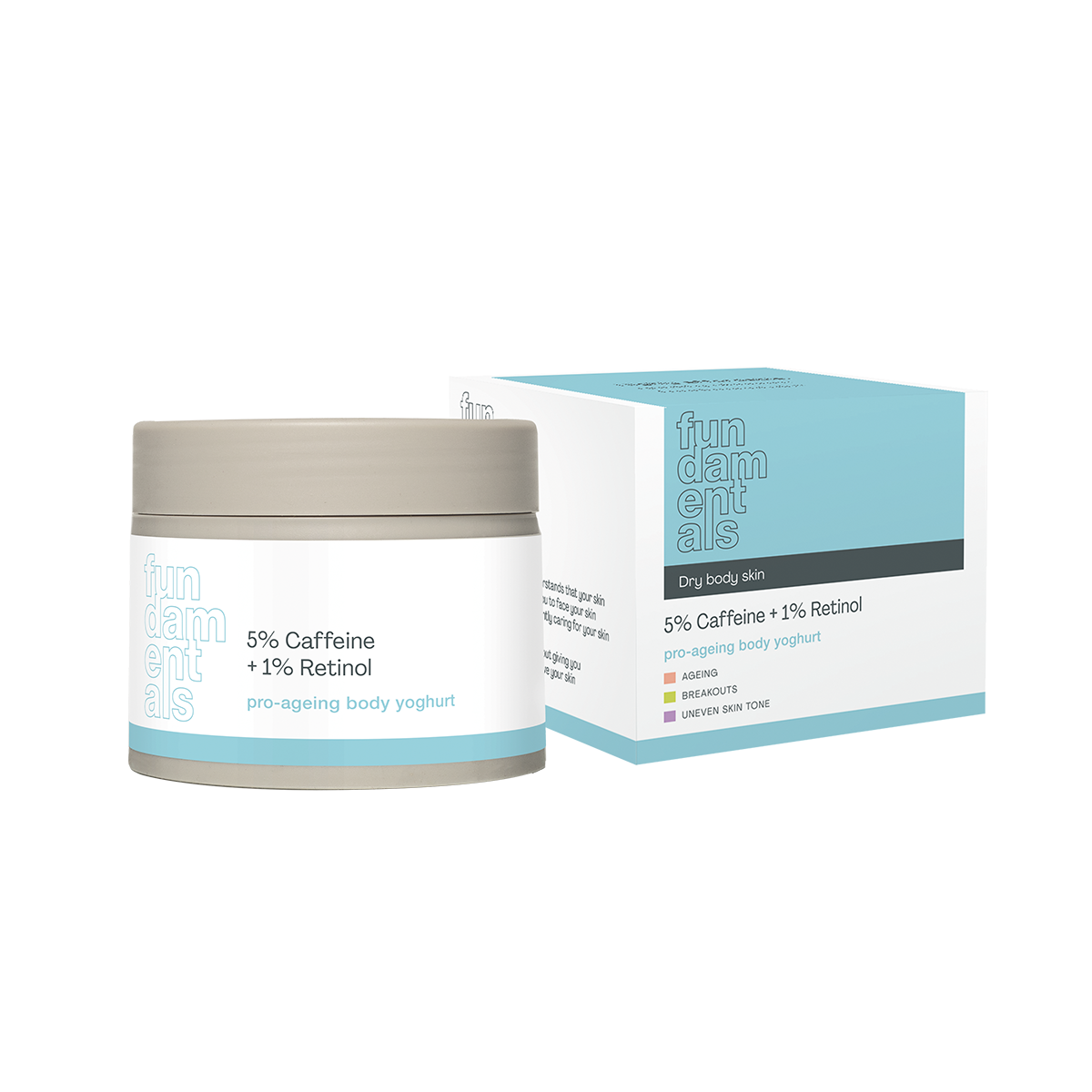
For the body · Firming
5% Caffeine + 1% Retinol Pro-ageing Body Yoghurt
Retinol for the body, not the face. This 5% caffeine and 1% retinol formula targets arms, thighs, stomach, and décolletage. It firms sagging skin, smooths crepey texture, and improves the look of cellulite and elasticity, which means tighter, more toned body skin. Best for mature, post-menopausal, or sun-damaged skin. Massage into clean dry skin after showering, evening only if new to retinol, and wear SPF 30+ on exposed skin by day. Patch test on the inner arm first.
View productChoose the 0.3% serum first if this is your very first retinol, and keep the stronger options for later.
How to use retinol: a simple step-by-step routine
Here is how to use retinol correctly as a beginner, one step at a time:
- Cleanse your face with a gentle wash and remove all makeup.
- Dry the skin completely. Applying retinol to damp skin increases irritation.
- Apply a pea-sized amount or 2 to 3 drops at night, avoiding the eye area, nostrils, and lips.
- Follow with moisturiser to lock in hydration and calm the skin.
- Wear broad-spectrum SPF 30+ the next morning, without fail.
If your skin runs sensitive, try the sandwich method: apply moisturiser first, then retinol, then a second layer of moisturiser. This buffers the active, which means less sting and less flaking while your skin adjusts.
This routine works for most skin types, but it is not for anyone who is pregnant or breastfeeding. Patch test tonight on your inner arm before you commit it to your face.
How often should beginners use retinol?
Beginners should use retinol two to three nights per week, then build to nightly as tolerance grows. This slow introduction is the single most important rule for how often to use retinol without a reaction.
Your skin needs time to adapt to faster cell turnover. Going straight to nightly use overwhelms the skin barrier, which means redness, peeling, and stinging that could put you off retinol for good.
A simple schedule looks like this:
- Weeks 1 to 3: two to three nights a week.
- Weeks 4 to 6: every other night if all feels calm.
- Week 7 onward: nightly, only if your skin is comfortable.
There is no prize for rushing. Slow and steady wins here. Start with two nights this week and add a third only once your skin feels settled.
Understanding purging, irritation, and the adjustment period
The retinol purge is a temporary phase of small breakouts and flaking as cell turnover speeds up. It usually shows up in the first two to four weeks and settles as your skin adjusts.
We will be honest about what the first two weeks actually feel like. You may notice mild flaking around the nose and mouth, a slight tightness after cleansing, and skin that looks a little dull before it looks better. This is normal, not a sign the product is failing.
What is not normal is intense burning, swelling, or an itchy rash. That points to irritation or a reaction, and you should stop and simplify your routine.
To ease the adjustment:
- Use less product, not more.
- Buffer with moisturiser using the sandwich method.
- Drop the frequency back a step if flaking gets heavy.
Patch test on your inner arm for two to three days before your first full application to check how your skin responds.
What not to mix with retinol
Do not layer retinol with strong AHAs or BHAs on the same night when you are starting out. Combining exfoliating acids with retinol overwhelms the skin barrier, which means a much higher chance of burning and peeling.
Some pairings, though, are genuinely helpful:
- Niacinamide pairs well with retinol and can reduce irritation, which means a calmer, less reactive experience.
- Hyaluronic acid adds hydration and buffers dryness, which means less tightness and flaking.
Here is the simple rule for common questions. Keep vitamin C for the morning and retinol for the night. Skip the acid toners and exfoliating scrubs on your retinol nights. And never double up strengths thinking it works faster.
Our 0.3% serum already includes niacinamide and hyaluronic acid, which means the calming and hydrating work is built in. Review your current products tonight and set aside any AHA or BHA exfoliants for your non-retinol nights.
Sun protection and retinol: a non-negotiable pairing in South Africa
Retinol increases sun sensitivity, so daily broad-spectrum SPF 30+ is non-negotiable, especially under strong South African sun. With UV levels that regularly hit extreme in summer, skipping SPF undoes everything retinol is doing.
Unprotected sun exposure while using retinol can cause new dark spots and fresh irritation. Which means you would be creating the exact problems you are trying to fix.
Apply sunscreen every morning, even on cloudy days, and reapply if you are outdoors. This one habit protects your collagen, your even tone, and your investment.
When you are ready to build your routine, you can shop retinol that is made in South Africa, vegan, cruelty-free, and cosmeceutical-grade. Local formulation means products made with our high-UV conditions in mind.
Apply SPF 30+ tomorrow morning before anything else, and treat it as step one of your retinol routine, not an optional extra.
Frequently asked questions
What does retinol do to your skin?
Retinol speeds up cell turnover and boosts collagen production. This renews skin cells faster and strengthens skin structure over time. The result is smoother texture, softer fine lines, a more even tone, and firmer-looking skin, usually visible within a few weeks of consistent, correct use.
How long does retinol take to work?
First changes typically appear in four to six weeks, with fuller results by twelve weeks. Texture and brightness improve first, followed by fine lines and tone. Consistency matters more than strength. Use it regularly, protect with SPF, and give it the full twelve weeks before judging results.
What strength retinol should beginners start with?
Beginners should start with 0.3% retinol, the gentlest beginner strength. This minimises irritation while delivering results. Once your skin tolerates it well, you can progress to 0.5% and higher. Think of strength as a ladder, not a race, because climbing too fast is the number one beginner mistake.
Can I use niacinamide with retinol?
Yes, niacinamide pairs well with retinol and can reduce irritation. It supports the skin barrier and calms redness, which makes retinol easier to tolerate. Our 0.3% Retinol Serum already includes 2% niacinamide, so beginners get the calming benefit built into a single step.
Can I use hyaluronic acid with retinol?
Yes, hyaluronic acid works well with retinol. It draws moisture into the skin and buffers the dryness retinol can cause. Which means less tightness and flaking during the adjustment period. Apply it alongside or before your moisturiser to keep skin comfortable and hydrated.
Can I use vitamin C and retinol together?
The standard approach is vitamin C in the morning and retinol at night. Vitamin C protects skin against daytime damage, while retinol renews it overnight. Splitting them across the day keeps both stable and effective, and it reduces the chance of irritation from using them at once.
Can you use retinol when pregnant?
No. Retinol and other retinoids are generally avoided during pregnancy and breastfeeding. Vitamin A derivatives are not recommended at these times. Please consult your doctor for advice on safe alternatives. If you are pregnant or breastfeeding, do not start retinol until you have professional medical guidance.
What does a retinol purge look like?
A retinol purge looks like temporary small breakouts and flaking as cell turnover speeds up. It usually appears in the first two to four weeks and settles as skin adjusts. Intense burning, swelling, or a rash is not a purge, so stop and simplify if that happens.
What should I avoid mixing with retinol?
Avoid layering retinol with strong AHAs or BHAs on the same night as a beginner, as this overwhelms your skin barrier. However, niacinamide and hyaluronic acid pair excellently with retinol to reduce irritation and boost hydration. Keep vitamin C for mornings and retinol for nights.
How often should you use retinol as a beginner?
Start with two to three nights per week, then build to nightly as your skin adapts. This slow introduction gives your skin barrier time to adjust and reduces irritation. If flaking becomes heavy, drop back a step. There is no benefit to rushing the frequency.


